Pillows · Materials · Sleep
Pillow Fill Explained: Matching Loft, Breathability, and Care to Your Sleep Style
A pillow is a small landscape beneath the head: it compresses, rebounds, holds warmth, and changes shape through the night. Its filling helps determine whether the neck feels supported, whether heat can escape, and whether the pillow remains comfortable after months of use. Understanding those details makes it easier to choose by more than a quick squeeze in a shop.
Published October 21, 2026
At bedtime, a pillow seems simple: a soft surface between the head and mattress. Yet its job is exacting. It must compress enough to cushion, resist enough to support, and adapt to the sleeper’s movements without leaving the head tilted for hours. Fill—the material packed inside the casing—shapes this balance. It influences loft, firmness, airflow, moisture management, maintenance, and the way a pillow responds over time.
There is no universally correct pillow fill. A side sleeper and a stomach sleeper may need different heights; a person who tends to feel warm may value airflow more than a plush, enveloping sensation. Even two pillows made from the same fiber can behave differently because of fill quantity, construction, casing, and how the material is distributed. The best pillow is not necessarily the most expensive or the one that feels softest at first touch. It is the one that supports a comfortable, neutral position and suits the sleeper’s real habits.
Natural fills such as wool and kapok offer distinct experiences. Wool tends to feel springy and substantial, while kapok is notably light and buoyant. Each has advantages, limitations, and care considerations. Comparing them begins with a few useful distinctions.
Loft, firmness, and support are not the same thing
Loft describes a pillow’s height, especially when it is resting without pressure. Firmness describes how much resistance it offers when compressed. Support is the practical result: whether the pillow helps keep the head and neck in a comfortable, reasonably aligned position for a particular sleeper.
A tall pillow is not automatically supportive. A lofty fill may collapse rapidly under the head, while a lower pillow with resilient fibers may hold a steadier shape. Similarly, a firm pillow may push the head upward rather than support it well. Think of loft as the starting height and support as what happens once the pillow meets the weight and shape of the head.
Sleep position offers a useful first guide, but it is not a rulebook. Shoulder width, mattress firmness, body proportions, and personal preference all change the distance between the head and mattress.
- Side sleepers often need enough loft to fill the space between the outside shoulder and head, without forcing the neck upward. A pillow that compresses too far may leave the head angled toward the mattress.
- Back sleepers commonly prefer moderate loft. Excess height can tip the chin toward the chest; too little may allow the head to fall back without comfortable support.
- Stomach sleepers often find a low, yielding pillow more comfortable because a high pillow can turn or extend the neck. Some prefer little or no pillow beneath the head, depending on comfort.
- Combination sleepers change position during the night. A fill that shifts or rebounds in a way they find comfortable may matter more than a fixed, high profile.
Use these as starting points, then pay attention to how the pillow behaves under your own head. A pillow’s advertised height is less informative than its compressed height, and a brief showroom test cannot perfectly reproduce a full night’s movement. If a pillow produces recurring discomfort, persistent neck pain, or numbness, consult a qualified health professional rather than relying on bedding changes as treatment.
Wool: resilient, substantial, and responsive
Wool fibers have a naturally crimped structure. In a pillow, that crimp can help create a springy, resilient feel: the fill yields under pressure, then tends to recover rather than remaining completely flattened. Wool pillows are often described as having a more grounded hand than airy, loose fills. Depending on construction and quantity, they can feel supportive without the hard, fixed sensation some sleepers dislike.
Wool also interacts with moisture and heat differently from a smooth, dense synthetic surface. The fiber can absorb some water vapor while still feeling comparatively dry, and an open, well-made pillow may allow air to move through its fill. These qualities can appeal to sleepers who dislike a clammy sensation. They do not guarantee that a person will sleep cool: room temperature, pillowcase fabric, the casing, fill density, and individual physiology matter too.
Over time, wool can compress or shift, particularly when the pillow is used night after night in the same spot. Gentle fluffing and regular airing may help restore an even shape. The right routine depends on the specific pillow. Some wool-filled pillows are not designed for machine washing, and soaking a dense natural fill can make it difficult to dry completely. Follow the maker’s care instructions, protect the pillow with a washable cover, and avoid assuming that natural fiber means uncomplicated laundering.
Wool may suit sleepers who want a resilient, gently yielding pillow and are comfortable with the maintenance a particular construction requires. It is not a universal answer for allergies or sensitivities; individuals can react to fibers, dust, detergents, or other components. Check the full material information and consult a clinician for health concerns.
Kapok: lightness with a buoyant feel
Kapok comes from the silky fibers surrounding the seeds of the kapok tree. The fibers are light and airy, which gives kapok-filled pillows a noticeably buoyant feel. For someone accustomed to dense foam or tightly packed wool, the sensation can be surprising: the pillow may feel lofty and soft while still offering a degree of spring.
Its lightness can make a kapok pillow easy to fluff and reposition. The fill may shift as the sleeper moves, so some people enjoy its adaptable, cloudlike character, while others prefer the more consistent resistance of a denser pillow. Loft and firmness vary with fill quantity, casing, and construction. A pillow described as kapok is not necessarily low, high, firm, or soft without those additional details.
Airiness can support a less dense feel, but it should not be mistaken for a promise of cool sleep. Warmth depends on the entire bedding system, including the pillowcase, room conditions, and the sleeper. A closely woven or heavily quilted casing may alter airflow, and a pillow can retain warmth when packed tightly or covered by several layers.
Care is another point to investigate before choosing. Kapok is a plant-based fill, but that does not mean every kapok pillow is machine washable. Water can affect the fill and make thorough drying difficult. Many natural-fill pillows are best protected with a removable, washable pillowcase and kept clean through regular airing, rather than washed frequently. Always follow the product’s specific instructions.
Kapok can be a good fit for someone who values a light, lofty sensation and is willing to maintain the pillow according to its construction. If you prefer a pillow that stays in one place and offers a dense, unchanging surface, its shifting quality may not be ideal.
Breathability is a system, not a single claim
People often shop for a “cooling” pillow, but temperature comfort is produced by several interacting elements. Fiber type matters, yet so do the spaces between fibers, the pillow’s density, the casing, the pillowcase, the mattress, and the bedroom climate. A breathable filling cannot compensate for every heat-trapping layer around it.
Airflow describes how readily air passes through a material. Moisture management describes how a material handles water vapor or perspiration. These are related but not identical. A pillow may allow air movement while still feeling warm to a particular sleeper, or it may absorb some moisture without feeling damp. Natural fibers are often chosen for their tactile and moisture-related characteristics, but the result depends on the finished pillow rather than the fiber name alone.
Start with practical questions. Does the pillow feel hot at the point where your cheek rests? Does it become damp or uncomfortable? Does a lighter pillowcase make a noticeable difference? If you wake warm, assess the whole bed before replacing the pillow: a heavy duvet, a synthetic mattress protector, high room temperature, or a thick pillow protector may contribute to the sensation.
Fabric at the surface matters because it is the first layer against the face. A breathable, washable pillowcase can help keep the pillow clean and may change the immediate feel. Linen, cotton, and other fabrics each have different textures and care needs; weave, weight, and finish affect how they feel. The casing inside the pillow also counts, because it contains the fill and can influence movement and airflow.
Choosing a pillow by sleep style
A pillow-buying guide should begin with the position in which you spend the most time, then account for changes through the night. Make a practical comparison rather than looking for a single material to solve every problem.
- If you sleep mostly on your side: Look for enough resilient loft to keep the head from dropping toward the mattress. Consider how much the fill compresses under pressure. Wool may appeal if you want a more substantial response; kapok may appeal if you prefer a lighter, loftier sensation. Neither is automatically the better choice.
- If you sleep mostly on your back: Seek a height that supports without pushing the chin down. A pillow that can be gently adjusted or redistributed may help you fine-tune its shape, provided the construction allows it.
- If you sleep mostly on your stomach: Begin with a low profile and a yielding feel. A bulky, high-loft pillow can place the neck at an uncomfortable angle. Natural fill alone does not determine whether a pillow is suitable; its compressed height is key.
- If you change positions: Consider whether you want the fill to shift easily or hold a more stable form. A light, mobile fill can feel adaptable, but it may need more frequent fluffing. A resilient fill can offer a steadier feel, depending on density and construction.
When possible, check whether the pillow’s fill can be adjusted, whether it has an inner liner, and whether replacement or additional fill is available. These details can extend usefulness by allowing changes to loft as preferences evolve. If adjustment is not possible, compare the pillow’s stated dimensions and fill amount, but remember that dimensions do not tell the whole story about compression.
Also consider the mattress. A soft surface allows the shoulder to sink farther for many side sleepers, changing the required pillow height. A firmer mattress may keep the shoulder higher and alter that gap. This is one reason a pillow that worked well in one bed may feel different in another.
Pillow care: protect first, clean thoughtfully
Care can preserve comfort as much as it preserves appearance. A pillow gathers skin oils, moisture, and dust through routine use. A washable pillowcase provides the first line of protection; a separate pillow protector can add another removable layer, provided it is compatible with the pillow’s care needs and does not make it uncomfortably warm.
Wash pillowcases regularly according to their labels. For the pillow itself, do not rely on a generic schedule: wool, kapok, and other fills respond differently to water, agitation, heat, and drying time. A natural pillow that cannot be safely machine washed may still be maintained by airing it in a dry, well-ventilated place and addressing spills promptly according to the manufacturer’s guidance.
When a pillow is approved for washing, use the specified cycle and detergent, and make sure it dries fully before returning it to the bed. Damp fill can develop odors and may deteriorate. Avoid harsh chemicals, excessive heat, and forceful wringing unless the care label explicitly permits them. If only the cover is washable, remove and launder that component rather than washing the filled pillow.
Fluffing helps redistribute fill and reveal whether it has become uneven. Some pillows respond well to a gentle shake or kneading; others may be damaged by aggressive handling. Airing can refresh the surface, but direct, prolonged exposure to intense sun may affect some fabrics and finishes. Use the care directions as the authority for the specific product.
Replace a pillow when it no longer returns to a comfortable shape, has persistent odors or damage, or cannot be kept clean according to its care requirements. Age alone is not a precise measure of performance: frequency of use, construction, and upkeep all influence how long a pillow remains comfortable.
A pillowcase is part of the experience
The pillowcase touches the face and helps shield the filling, so it deserves attention in any pillow-care routine. A breathable, well-fitting case can protect the pillow while preserving its intended feel. If the case is too tight, it may compress the loft or restrict the fill’s movement. If it is too loose, the pillow can bunch inside it. Match the case size to the pillow and wash it in a way that suits its fabric.
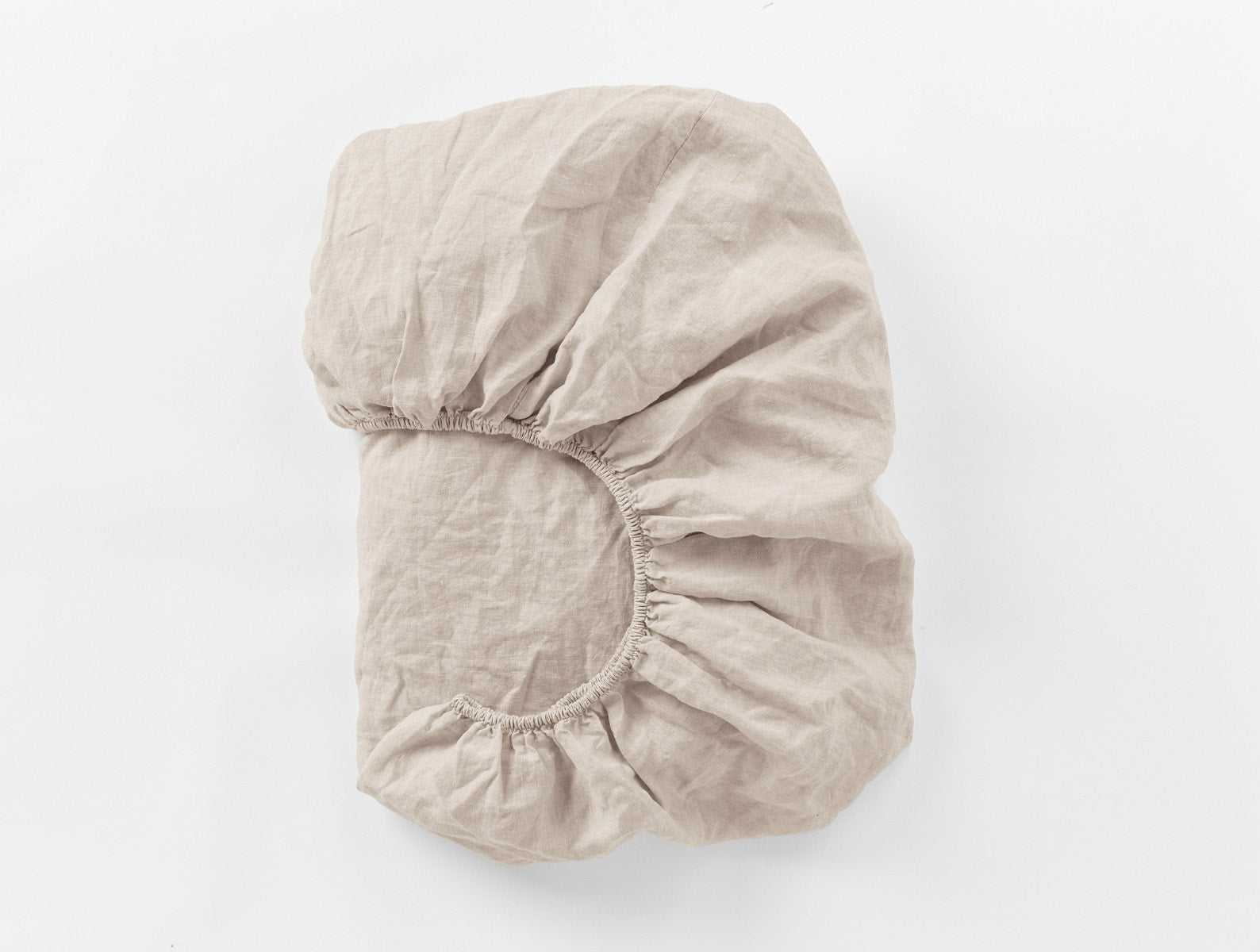
For a coordinated bed, materials need not be identical from head to foot. A linen pillowcase can sit comfortably alongside cotton sheets, for example, as long as the textures and care instructions work for the household. Sophisticated bedding is not defined by uniformity; it comes from understanding how each layer behaves and choosing a combination that is practical to live with.
When selecting any pillowcase, look beyond appearance to fiber content, weave, seams, and closure. A smooth surface may feel different from a more textured one, and a breathable case may feel different from a dense, brushed fabric. The casing of the pillow and the pillowcase together form the surface against which the sleeper rests.
A simple comparison checklist
Before choosing between wool, kapok, or another fill, write down what you want the pillow to do. The following questions turn vague impressions into useful criteria:
- What is my most common sleep position, and how much height does it seem to require?
- Do I prefer a dense, springy feel or a light, buoyant one?
- Does the pillow need to hold a stable shape, or do I enjoy shifting and fluffing it?
- Do I tend to feel warm, and have I considered the pillowcase, protector, and duvet as part of that experience?
- Can the pillow be washed, or is it maintained through a removable cover and careful airing?
- Are the care instructions realistic for my household routine?
- Does the product clearly state its materials, dimensions, and construction?
Clear answers matter more than fashionable claims. “Natural,” “cooling,” and “supportive” can describe useful qualities, but none guarantees a particular person’s comfort. Look for specific information about fill, casing, care, and dimensions, then judge the pillow in the context of your bed and habits.
The material is only the beginning
Wool and kapok illustrate why pillow fill deserves closer attention. Wool’s resilience and substantial feel contrast with kapok’s lightness and buoyancy. Both may offer a different experience from dense, fixed materials, yet neither is automatically best for every sleep position, climate, or care routine. Fill quantity, pillow shape, casing, and surface fabric can change the result as much as the raw fiber itself.
Choose by the relationship between body and bed: the height that feels comfortable, the way the material compresses, and the maintenance you can sustain. Give breathability a whole-system perspective, and treat a washable pillowcase as an everyday tool rather than a finishing touch. With those factors in view, a pillow becomes less of a guess and more of a considered piece of the sleep environment—quietly shaped around the person who rests there.