Textile knowledge · Bedding
Inside the Linen Duvet Cover: Weave, Closures, and Everyday Care
A linen duvet cover is more than a protective layer. Its weave shapes the way it feels against the skin; its weight influences the way it falls across a bed; and the small decisions in its construction determine whether the duvet stays neatly in place. Knowing what to look for makes it easier to choose a cover that suits your habits—and to care for it so the fabric can serve you well over time.
Published November 7, 2026
Linen begins as flax, but the finished cloth is shaped by many hands and processes: fibers are prepared and spun into yarn, yarns are interlaced on a loom, and the resulting fabric may be washed, softened, or otherwise finished. The duvet cover’s character emerges from this chain of choices. Two covers can both be labeled linen and still differ markedly in texture, weight, drape, and the amount of care they require.
That distinction matters because a duvet cover is a working textile. It is slept beneath, pulled into place, removed for laundering, and handled at the corners and closure over and over again. A little attention to weave, fabric weight, seams, and fastening details can help make sense of what a product description does—and does not—tell you.
There is no single ideal linen duvet cover. Some people prefer an airy, relaxed surface that softens with use; others want a firmer cloth with more body and a crisper appearance. The useful question is not whether one finish is universally superior, but which construction fits the way you sleep, make the bed, and manage laundry.
What a weave tells you
Weave describes how lengthwise yarns, called warp, cross with widthwise yarns, called weft. The pattern and spacing of those crossings affect a fabric’s surface, flexibility, and stability. Many everyday linen fabrics use a plain weave: the yarns pass over and under one another in a regular sequence. This familiar structure can create a balanced cloth, but its precise feel depends on yarn thickness, density, finishing, and the quality of the flax fiber.
A plain weave does not automatically mean a stiff or rough cover. A finer yarn, a lighter construction, and softening during finishing may produce a fabric that feels supple from the outset. A heavier or less softened cloth can feel more substantial and crisp. Likewise, a loose-looking surface may drape differently from a compact one, but appearance alone cannot reliably reveal how durable a textile will be. Construction and finishing work together.
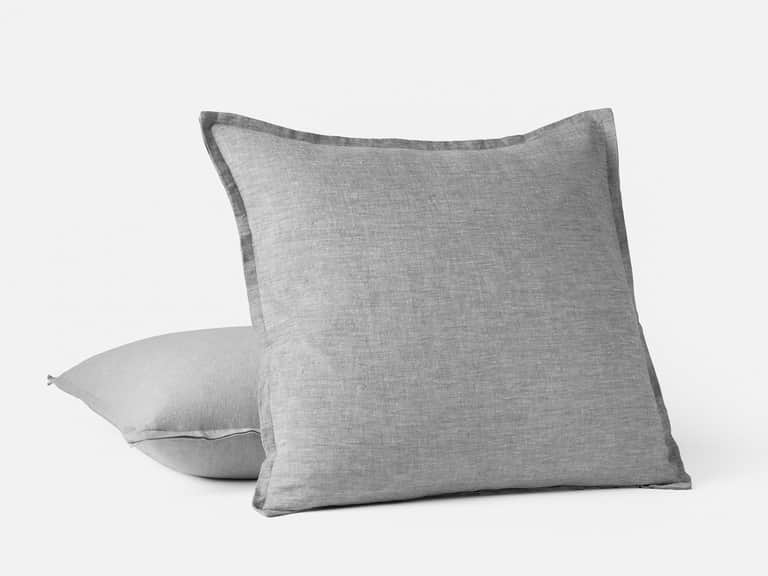
Linen is often recognized by the small irregularities that remain visible in its surface. Natural flax yarns can vary in thickness, and those variations may show as subtle slubs or small changes in texture. They are part of linen’s character, not necessarily evidence of a flaw. Still, pronounced weak spots, unraveling edges, or inconsistent stitching are separate concerns: those involve the integrity of the cloth or its sewing, not the natural variation of the yarn.
Descriptions such as “stone-washed,” “relaxed,” or “softened” usually refer to finishing intended to alter the hand of the fabric before it reaches the bed. A prewashed cover may feel more yielding at first than an untreated one. The exact meaning of a finish can vary, so it is helpful to look for the practical information as well: fiber content, stated fabric weight if provided, care instructions, and details about closures or construction.
Weight, drape, and the feel of the bed
Fabric weight is one clue to how a linen duvet cover may behave. It is commonly reported in grams per square metre or ounces per square yard, although not every maker provides it. Weight can help compare fabrics when the figures are measured and presented consistently, but it is not a complete quality score. Fiber quality, yarn construction, weave density, finishing, and sewing all contribute to performance.
A lighter linen may feel more fluid and move readily as the duvet shifts. It can suit someone who likes a less substantial cover, though the feeling of coolness or warmth depends on the complete bedding arrangement and the room—not just the cover. A cloth with more body may fall in broad, relaxed folds and feel more substantial in the hand. It may also take longer to dry after washing.
Drape is the way fabric hangs and settles under its own weight. On a bed, it is visible in the folds that gather near the corners and along the sides. Drape affects presentation, but it also has a practical side: a flexible cover may move more easily as a sleeper turns, while a weightier cover can settle with a more grounded appearance. Neither description guarantees a particular sleep temperature. A duvet insert, room conditions, personal comfort, and the layers beneath the cover all play a part.
Thread count is often used to describe cotton bedding, but it should not be treated as a universal measure for linen. Linen’s yarns and weave are different, and a thread-count figure on its own cannot explain the fabric’s full character. For an informed comparison, begin with fiber content and construction. If weight and finishing are listed, consider them alongside—not instead of—the more basic facts.
The details that keep a duvet in place
A well-made duvet cover needs to fit the insert and stay closed during use. Closures are located along an opening, usually at the foot or on one side. Common options include buttons, a zipper, snaps, or a fabric overlap such as an interior flap. Each arrangement has practical trade-offs, and the best choice depends on how often the cover is removed and what feels easiest to handle.
Buttons and buttonholes
Buttons are familiar and can be simple to replace if one comes loose. Their performance depends on secure attachment, well-finished buttonholes, and a spacing that keeps the opening closed. Before choosing a cover, consider whether the buttons are exposed or concealed, and whether the opening is broad enough to make inserting a large duvet manageable. A carefully finished button closure should not leave an unnecessarily wide gap between fastenings.
Zippers and snaps
A zipper can close a long opening quickly and hold its edges together continuously. It is worth checking whether it is protected by a fabric guard and whether its placement will make the cover comfortable in use. A zipper that catches fabric during laundering or insertion can become frustrating, so closing it before washing is a useful habit. Snaps offer another low-profile option; their durability depends on how firmly they are attached and how they are used.
Interior flaps and overlaps
An interior flap is a panel of fabric that folds over the opening. This can provide extra coverage without relying on a row of visible fasteners. The flap’s depth and placement affect how securely the opening stays closed, so it helps to read the construction description rather than assuming all overlaps function alike. A flap is not the same as the fastener itself: some designs use it alongside buttons or snaps.
Interior ties
Corner ties or loops are designed to attach the duvet insert to the cover and reduce migration. Without them, the insert may slide away from a corner or bunch during the night, particularly if the cover and insert do not fit well together. Some covers have ties at all four corners; others include more attachment points. Check the cover’s description and the insert’s construction, since a tie can only help if there is a compatible loop or another secure way to fasten it.
When tying an insert in, use a firm, comfortable knot that can be undone without pulling sharply on the linen. Keep the insert’s corners aligned with the cover’s corners before fastening. If the duvet continues to twist or slip, first check that the dimensions are compatible and that every tie is attached. A mismatch in size can create slack that no closure detail can fully correct.
Construction beyond the opening
Closures often attract attention because they are easy to see, but a duvet cover’s seams and finishing deserve a close look too. Neat, even stitching helps join panels and finish edges. A well-finished seam should be secure and consistent, without loose threads or sections that appear under strain. If the cover has a decorative flange, piping, embroidery, or trim, consider whether its care requirements match the rest of the cloth. Added details can create visual interest, but they may need gentler handling.
Dimensions are equally important. Duvet and cover sizing conventions vary across regions and makers, so do not rely only on labels such as “queen” or “king.” Compare the actual measurements with the insert, allowing for the cover’s intended fit. A cover that is much larger than its insert may look loose and let the filling shift. One that is too small can strain the seams and compress the duvet.
Read the stated fiber content carefully. A linen duvet cover may be 100% linen, or it may contain other fibers. A blend can behave differently from pure linen in feel, drape, and care. “Linen” also refers to the flax-based fiber, not simply to a pale, textured appearance. Clear labeling helps separate material information from style language.
A careful washing routine
Begin with the care label attached to the cover or supplied by its maker. It takes precedence over general linen advice because dyes, finishes, trims, and sewing can change what is appropriate. If the cover is new, check the instructions before washing; some textiles have specific guidance about water temperature, cycle selection, or drying.
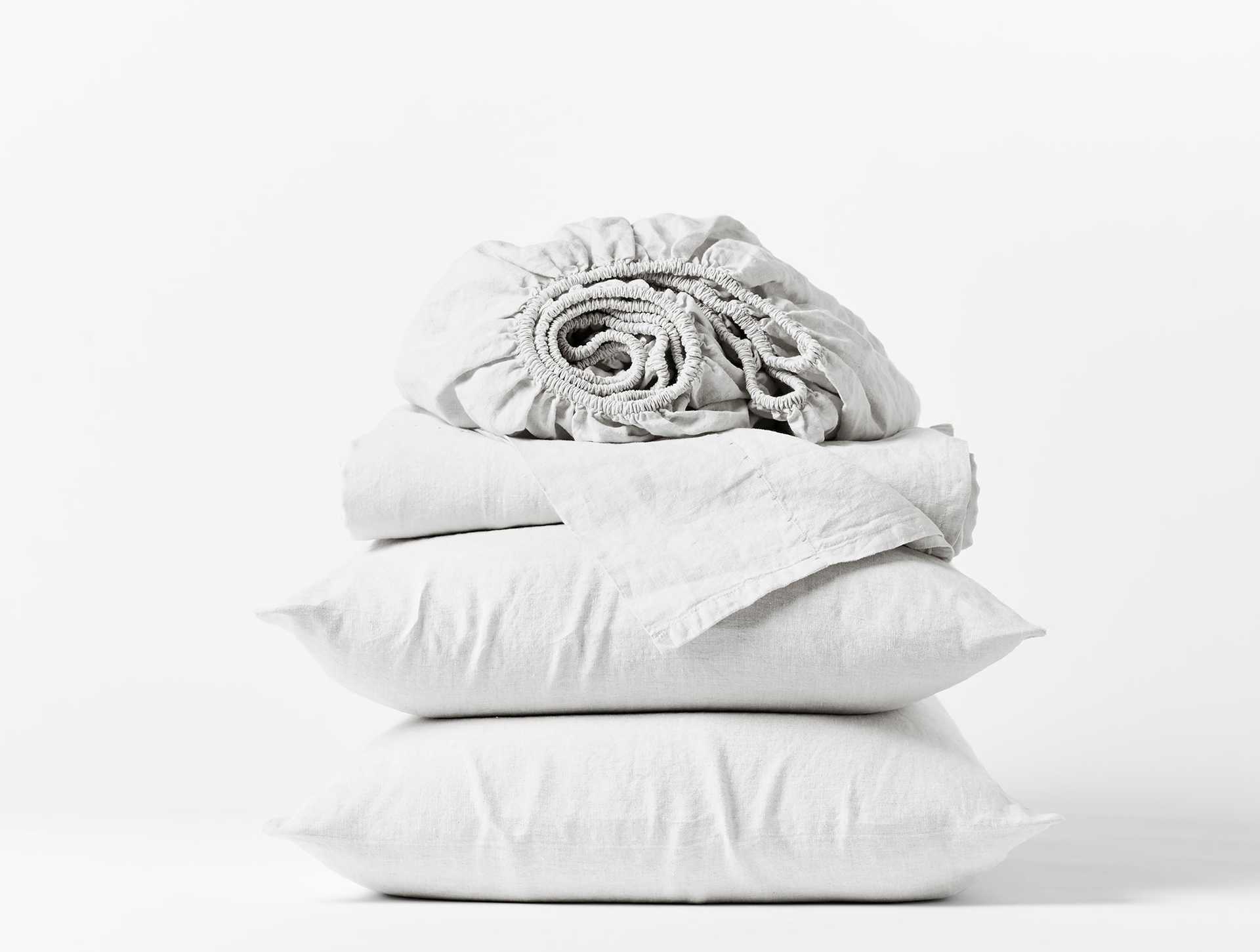
- Prepare the cover. Remove the duvet insert. Close buttons, snaps, or zippers, and turn the cover inside out if the care instructions suggest it. This can reduce abrasion on the outer surface and help protect fasteners.
- Wash with room to move. Avoid crowding the machine. Linen needs enough water and space to circulate and rinse. Overloading can increase creasing and keep detergent from rinsing away thoroughly.
- Choose a gentle setting. Use the temperature and cycle recommended on the care label. If there is no more specific direction, a gentle cycle and a moderate temperature are cautious starting points. Very hot water and harsh agitation may increase wear or affect fit.
- Use detergent sparingly. Measure according to the product instructions and the load size. Excess detergent can leave residue that makes cloth feel less fresh. Avoid bleach and fabric softener unless the care directions explicitly allow them; they can affect fibers, colour, or finish.
- Dry with restraint. Follow the label. When tumble drying is allowed, low heat and a shorter cycle can reduce the risk of over-drying. Remove the cover while it is still slightly damp if the instructions permit, then smooth it and finish drying on a line or rack.
Air drying can reduce reliance on high dryer temperatures, although the time required depends on airflow, humidity, and the thickness of the fabric. Spread the cover out so moisture can escape evenly, and avoid leaving it in a damp heap. Direct, prolonged sun may affect some dyed fabrics; choose a shaded, well-ventilated place when colour preservation is a concern.
If using a dryer, avoid treating a long cycle as a substitute for checking the fabric. Excess heat and extended tumbling can make linen feel dry and rigid, increase creasing, and place unnecessary stress on seams. A few minutes of careful handling at the end of the cycle—shaking out the cover and smoothing its edges—can make it easier to fold or put back on the insert.
Wrinkles, softness, and the lived-in surface
Linen wrinkles readily because of the way its fibers respond to bending. That characteristic is one reason a linen bed can look relaxed rather than sharply pressed. Wrinkles do not automatically signal poor quality or damage. If a smoother finish is preferred, a warm iron may help when the care label permits it; pressing while the cloth is slightly damp can make creases easier to release. Test an inconspicuous area first if the finish or colour is unfamiliar.
Over time, linen often becomes more pliable with regular use and laundering. The pace and degree of change depend on the fiber, weave, finish, and care routine. Avoid using fabric softener simply to accelerate softening: residue can build up, and a softer first impression is not necessarily a sign that the fabric is being treated well. Gentle washing and avoiding over-drying are more dependable habits.
For ordinary marks, deal with the stain as soon as practical. Blot rather than rub, and check the care label before applying a stain remover. Strong chemicals and chlorine bleach can damage fibers or alter colour. If a stain is persistent or the textile has embroidery, a special finish, or a delicate trim, seek advice appropriate to that specific fabric instead of experimenting with increasingly aggressive treatments.
Storage and everyday use
Before putting a linen duvet cover away for a season, make sure it is completely clean and dry. Store it in a dry, ventilated place, away from direct sunlight and sources of damp. A breathable fabric bag or a clean shelf is preferable to trapping residual moisture in an airtight container. Do not pack the cover so tightly that its folds are sharply compressed for months at a time.
Regularly inspect high-stress areas: the closure, the corners, and the seams where the cover is handled most. Reattaching a loose button or addressing a small open seam early may prevent a more extensive repair later. When changing the bedding, avoid pulling hard on one corner of the cover; distribute the movement across the fabric and use the duvet’s ties to keep the insert aligned.
Wash frequency depends on household habits, climate, and personal preference. There is no universal timetable that suits every bed. What matters is following the care label and not allowing the cover to sit damp or soiled for an extended period. Between washes, airing bedding in a dry, well-ventilated room can help it feel fresher, but airing does not replace laundering when cleaning is needed.
A practical checklist before you choose
Product descriptions can make linen duvet covers sound similar. A short checklist helps focus on the details that affect real use:
- Fiber: Is the cover 100% linen or a blend, and is the fiber content clearly stated?
- Fabric character: Are weight, weave, or finishing details available? Consider these as clues rather than guarantees.
- Fit: Do the cover’s measurements match the duvet insert?
- Fastening: Is the opening closed with buttons, a zipper, snaps, or an overlap?
- Insert security: Are there interior ties, and can they attach to the insert?
- Seams and trim: Are the construction details described, and do decorative features change the care routine?
- Maintenance: Can the cover be machine washed, and what temperature and drying method does the maker specify?
These questions are more useful than looking for one magic label or assuming a higher price, heavier fabric, or more elaborate closure automatically means better performance. A cover that fits the insert, suits your preferred feel, and can be cared for properly is often the more practical choice.
The quiet craft of a useful textile
The appeal of linen is partly tactile: a surface with subtle variation, a drape that settles into natural folds, and a hand that can evolve through use. But a duvet cover’s everyday success depends on less visible decisions too. The relationship between yarn and weave defines the cloth; finishing influences its first impression; seams and closures determine how it handles repeated changing; and a measured washing routine helps protect it from avoidable stress.
Learning to read those details turns a bedding choice into a more informed decision. Look beyond the word “linen” to the cloth’s weight and finish, the dimensions, the closure, and the care guidance. Once the cover is in use, give it room in the wash, handle it gently, and avoid excessive heat. These modest habits will not prevent every crease or change, nor should they: linen is a working fabric, and its character is part of the experience. They can, however, help preserve its comfort and construction through the ordinary rhythm of making, sleeping in, and washing the bed.