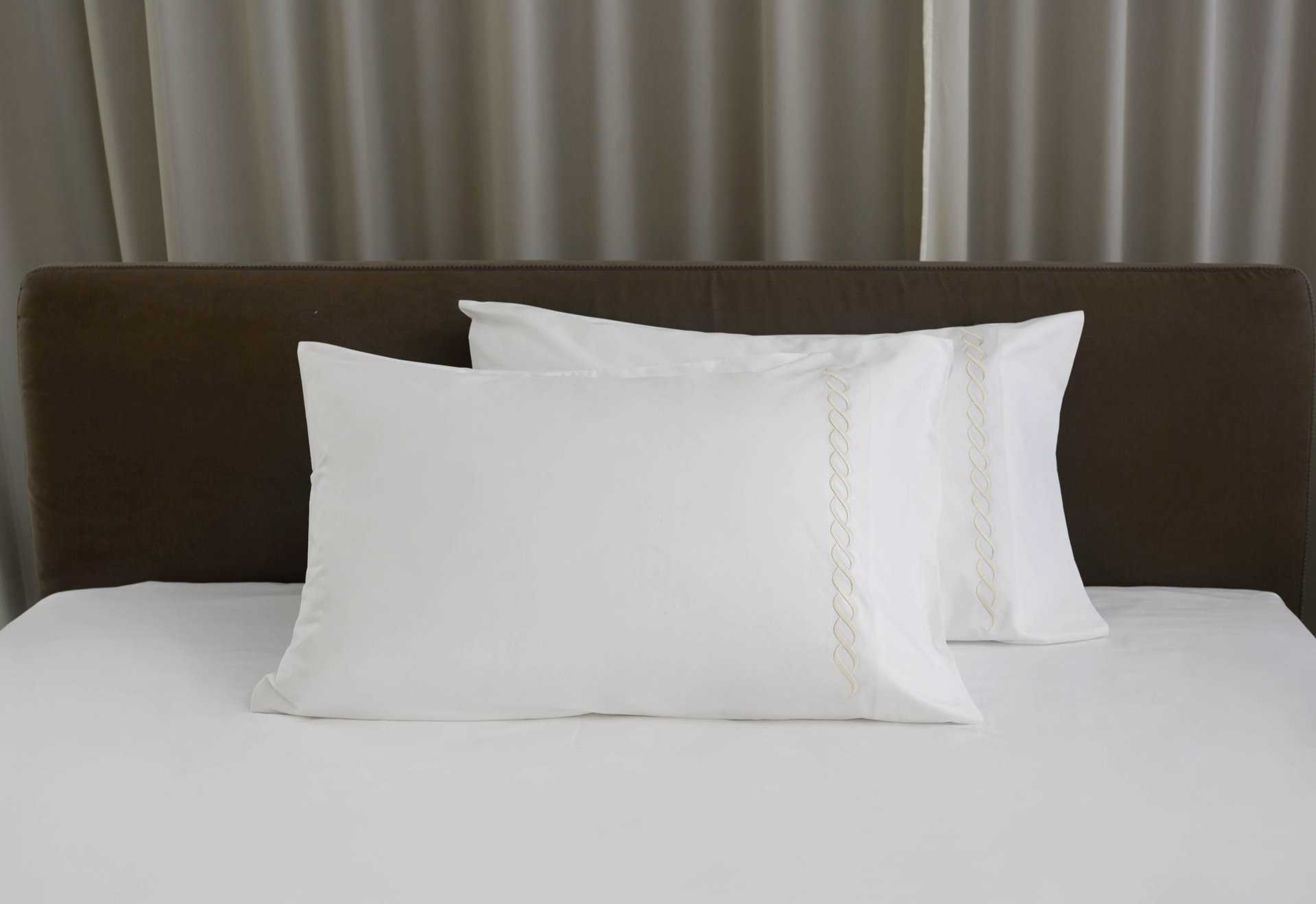
A practical guide to materials, support, and standards
What to Look For in an Organic Mattress: Materials, Support, and Certifications
An organic mattress is not defined by a reassuring label alone. Its comfort and environmental claims depend on what lies beneath the cover: the fibers and foams in each layer, how the mattress is assembled, the support it provides, and the scope of any certifications. A careful comparison begins with those details—not with a single word on a tag.
Choosing a mattress is an intimate decision made at the intersection of material science and daily life. A bed must support the body for hours at a time, respond to changes in sleeping position, and suit the sleeper’s preferences for firmness, temperature, and surface feel. When organic materials matter to you, another layer of investigation enters the picture: what is certified, what is merely described as natural, and how much of the finished product does a claim actually cover?
The term organic mattress can suggest a simple, uniform object. In reality, mattresses are assemblies. A cover may be made from cotton or wool, the comfort layer may contain latex or other materials, and the support core may use a different construction altogether. Adhesives, fire barriers, quilting, and fabric treatments can also affect what is present in the finished mattress. Looking at each component separately gives you a clearer picture than relying on a headline claim.
This guide explains how to assess organic mattress materials, understand support and firmness, interpret certifications, and compare practical details such as trial periods and care instructions. The aim is not to declare one construction best for everyone, but to help you ask more useful questions before choosing.
Begin with the mattress as a layered system
A mattress is not a single material. Its layers work together to create the surface feel, pressure relief, airflow, and stability you experience. Two mattresses described with the same fiber or filling can feel quite different when their layer thicknesses, densities, quilting, or internal structures differ.
Ask for a materials breakdown that identifies the cover, comfort layers, transition layers, support core, and any fire barrier. A clear description should distinguish fiber content from certification status and should say where materials appear in the construction. If the information only names one appealing ingredient, such as organic cotton, it may not tell you much about the rest of the mattress.
- Cover: Check the outer fabric and any quilted filling. Covers can influence breathability, surface texture, and the way the mattress initially feels.
- Comfort layers: These are closest to the sleeper and contribute to cushioning and pressure relief. Their composition and thickness can change how the bed responds to the shoulders, hips, and other contact points.
- Transition layers: Where present, these layers help mediate between a softer surface and a firmer support structure.
- Support core: This provides the mattress’s deeper structure. Its construction affects stability, resilience, and how the surface responds when weight is applied.
- Fire barrier and joining materials: Ask what materials are used and how layers are secured. “Natural” does not automatically describe every component.
Material transparency is useful even when a shopper does not have a technical background. It lets you compare like with like, recognize vague claims, and decide which details align with your priorities. When a manufacturer does not publish a complete component list, ask for one directly and note which claims are backed by documentation.
Understanding common organic mattress materials
Organic mattresses may incorporate plant- or animal-derived fibers and natural or processed materials, but the specific choices vary. The important question is not simply whether a material is described as natural. Consider its role, its certification, how it is processed, and how it contributes to the mattress as a whole.
Cotton and other cover fibers
Cotton is commonly used in mattress covers and quilting. It can provide a familiar textile surface, but the presence of cotton does not by itself establish that the entire mattress is organic. Look for the fiber content and the relevant certification, and check whether the claim applies to the cover, the cotton itself, or a broader portion of the finished product.
Fabric construction also matters. A knit cover can feel different from a woven one, while quilting can add loft or change the way the top surface settles against the body. These details are not a substitute for checking the materials, but they help explain why a mattress may feel distinct even when its fiber labels look similar.
Wool and other natural fibers
Wool may appear in mattress quilting or in a barrier layer. Its role and quantity can differ between models, so ask where it sits in the construction and what the manufacturer says about its origin and processing. A fiber’s natural reputation should not stand in for documentation about the specific material in the product.
If you have a sensitivity, allergy, or ethical concern related to a particular fiber, consider the full construction rather than just the sleep surface. Ask whether the material is enclosed, whether it appears in multiple layers, and whether alternatives are available. Product descriptions should be treated as the beginning of that inquiry, not as medical guidance.
Latex and other resilient comfort layers
Latex is used in some mattresses for its responsive feel. It may be made with different processes and may appear in the comfort layer or elsewhere in the mattress. Do not assume that a “natural latex” description means the material is certified organic, or that every latex component in a mattress has the same composition. Ask for the precise claim, relevant documentation, and the layer in which the latex is used.
For shoppers with latex sensitivities, mattress construction deserves particular attention. Ask the manufacturer to clarify whether latex is present, where it is located, and what information is available about the finished product. If you have a diagnosed allergy or medical concern, consult an appropriate health professional rather than relying on marketing language to assess risk.
What “organic” can—and cannot—tell you
“Organic” is a meaningful term when it is tied to a defined standard and a documented scope. Without those details, it may be unclear whether the claim refers to a raw fiber, a fabric, one mattress layer, or the mattress as a whole. A product can contain an organic component without every material in its construction being organic.
Read the exact wording carefully. Is the mattress described as made with organic cotton, or is the finished product certified to a named standard? Does the certification cover the material itself, processing, manufacturing practices, or multiple parts of the product? These distinctions matter because certifications do not all evaluate the same things.
For example, GOTS—the Global Organic Textile Standard—is a textile standard associated with organic fibers and relevant processing criteria. Its scope should be checked against the specific product and certificate. A textile certification does not automatically establish that every component of a complete mattress has the same status. Ask for the certificate or product listing and verify that it corresponds to the model you are considering.
Other certifications may address different questions, such as chemical emissions or the content of a particular material. A certification that evaluates one concern should not be treated as proof of every other environmental, health, or performance claim. The most reliable approach is to match each label to its stated purpose and the product documentation behind it.
How to evaluate mattress certifications
Certifications can make technical claims easier to compare, but a logo alone is not enough. Before treating a label as meaningful evidence, identify the certifying organization, determine what it evaluates, and establish whether it applies to the complete mattress or only to a component.
- Find the exact standard. Ask for the full name of the certification rather than relying on broad phrases such as “eco-certified” or “chemical-free.”
- Check the scope. Determine whether the standard covers a fiber, a textile, a material, a manufacturing process, emissions, or the finished mattress.
- Confirm product-specific evidence. Look for a certificate number, a listing, or documentation that identifies the product or material in question. A general statement about a company’s practices may not apply to every model.
- Review the date and status. Certification status can change. Confirm that the documentation is current and relevant to the version being sold.
- Separate certified facts from marketing language. Words such as “clean,” “green,” “pure,” or “non-toxic” are not interchangeable with a named standard.
- Ask what is not covered. A precise account of a certification’s limits is often as valuable as a statement of what it verifies.
These steps help prevent a common misunderstanding: assuming that one certification guarantees a mattress is organic, free of every potentially concerning substance, sustainable in every respect, and suitable for every sleeper. Standards are tools for answering defined questions. They are not universal verdicts on a product.
Support is personal, not a label
A mattress can have carefully sourced materials and still be the wrong fit for your body. Support is about how the mattress maintains a comfortable sleeping posture, while firmness describes the surface’s perceived hardness or softness. The two are related, but they are not the same thing.
A firm mattress may feel supportive to one person and uncomfortable to another. A softer surface can relieve pressure for some sleepers while allowing others to sink more than they prefer. Body shape, weight distribution, usual sleeping position, mobility, and personal comfort all influence the result. There is no single firmness level that reliably works for everyone.
Think about how you sleep most often. Side sleepers commonly pay attention to pressure at the shoulders and hips. Back sleepers may prioritize a balanced surface that feels stable through the night. Stomach sleepers often look for a feel that does not allow excessive sinking. These are useful starting points, not rigid rules: individual bodies and preferences vary.
When testing a mattress, lie in your usual position for more than a brief moment. Notice whether the surface feels comfortable at the points where your body meets the bed, whether turning feels easy, and whether you feel stable rather than as if you are tipping into a hollow. If you share the mattress, consider how movement and differing preferences affect both people.
Construction, airflow, and pressure relief
Materials and construction shape how a mattress responds to heat, moisture, and movement. A breathable cover cannot tell the whole story if the layers beneath it have a different feel or structure. Likewise, a material associated with airflow does not guarantee that every sleeper will remain cool; room temperature, bedding, humidity, and individual physiology all play a part.
Ask how the comfort and support layers are arranged and what the manufacturer says about their response. Does the surface cushion the body gradually, or does it feel more buoyant? Does the mattress recover quickly when pressure is removed? Can you change position without feeling restricted? These observations provide practical evidence about comfort that a material name alone cannot supply.
Pressure relief and spinal support should be considered together. A mattress that feels plush at first may not offer the balance you want after a full night, while a surface that feels initially firm can sometimes become more comfortable as the body settles. If possible, use the trial period to assess the mattress over several weeks, following the seller’s instructions about adjustment time and returns.
Do not overlook size, foundation, and care
Before ordering, measure the bed frame and check the mattress dimensions, thickness, and weight. Confirm that the mattress is compatible with the foundation or slat spacing specified by its maker. A suitable foundation can matter for stability and may be required to preserve warranty coverage.
Care instructions deserve a place in the comparison. Ask whether the mattress can be rotated, whether it should never be flipped, how to clean the cover, and whether a protector is recommended. Some covers are not removable or machine washable, so a shopper should not assume that a natural-fiber surface can be laundered like a bedsheet.
Also review the warranty and return policy in full. Check what conditions apply, how pickup or return shipping is handled, whether there are fees, and how a comfort trial begins and ends. A generous-sounding trial is only useful if its terms are clear and manageable.
A practical comparison checklist
When you compare organic mattresses, keep a record of answers rather than relying on memory. A simple checklist can reveal when one maker provides substantially clearer information than another.
- What is the exact material in the cover, quilting, comfort layers, support core, and barrier?
- Which components are certified organic, and which certification applies to each one?
- Does a named certification cover the material, the manufacturing process, emissions, or the complete mattress?
- Can the manufacturer provide current, product-specific documentation?
- What firmness options are offered, and how can you evaluate the feel at home?
- How does the mattress respond in your usual sleeping position?
- What foundation does the maker require or recommend?
- How should the mattress be cleaned, rotated, or protected?
- What are the return, trial, delivery, and warranty conditions?
- Are any claims broad or ambiguous enough to require clarification?
Common claims that deserve a closer look
Several familiar phrases sound definitive but may not explain much without supporting detail. “Natural” can describe an ingredient without indicating how it was processed. “Organic materials” does not say which layers qualify. “Chemical-free” is an imprecise promise: materials are made of chemical substances, so the useful questions concern specific substances, testing methods, and defined limits. “Hypoallergenic” also does not guarantee that a product will prevent an individual’s allergic response.
Instead of accepting or rejecting such wording at face value, ask what it means for the particular mattress. Request the underlying material list and certification scope, then compare that evidence with your own priorities. Clear answers should identify limits as well as benefits.
Making a decision that fits your priorities
There is no need to make every concern equally important. One shopper may place the greatest weight on verified organic fiber. Another may focus on pressure relief, a specific material sensitivity, or a return policy that permits careful testing at home. The best choice is the one that meets your essential needs with documentation you can understand.
Start by writing down the qualities you cannot compromise on, then separate them from preferences that would be welcome but are flexible. Compare materials and certifications first, then assess comfort and support, and finally review price, delivery, care, and warranty details. This order can help keep a persuasive label or a single appealing feature from overshadowing the rest of the mattress.
An organic mattress is best understood not as a promise wrapped in a label, but as a complete construction whose materials, standards, and performance can be examined. When the layers are clearly described, the certification claims are specific, and the support feels right for your body, the decision becomes more grounded. Careful questions turn the search from a contest of adjectives into a practical assessment of what you will sleep on night after night.